
An End in Sight?

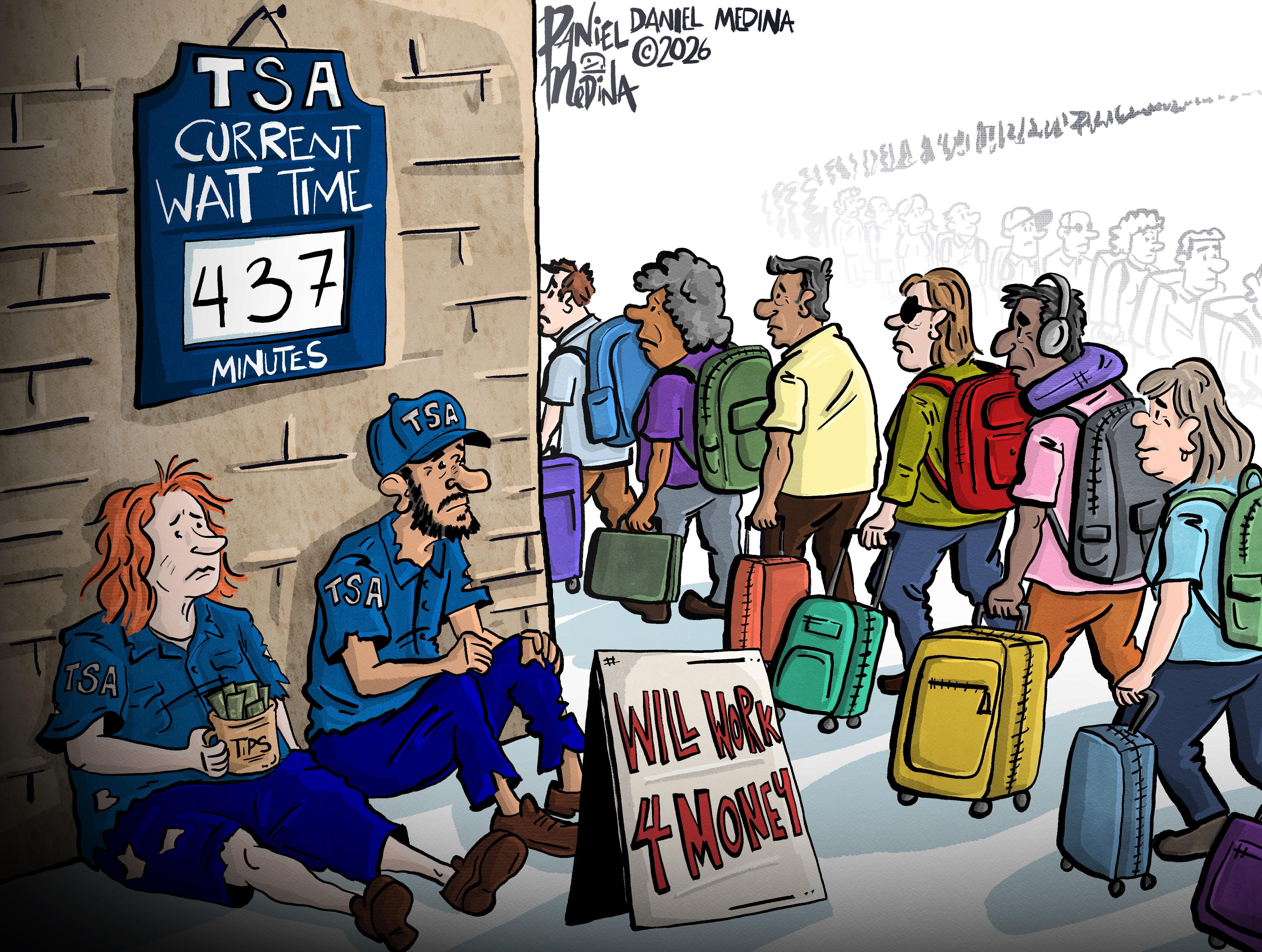
The Senate decided by unanimous voice vote to pass funding for most of DHS, except for ICE and Border Patrol. Everything happened in just moments at the crack of dawn. We do not know when the House will vote on this, but I am guessing it will be soon. This entire thing was 100% avoidable, and my heart breaks for the thousands of TSA workers who were held hostage and used as pawns in the GOP’s games. When I was a kid, my parents used to tell me that a federal job is the best kind of job one can have since it will always be funded and comes with great benefits, but the last decade, or so, has shown that may have been true once, but it is the furthest thing from the truth now. I hope the TSA employees who quit due to this shutdown can come back with no problems, I hope they get back pay with interest, and I hope our baboon congressmen can get their act together.
Follow me:
Instagram: danielmedinacomics
Bluesky: danielmedinacomics.bsky.social
Twitter: danielmedinaart
The TSA needs to go. TSA is a classically over-bureaucratized federal agency created in the emotional aftermath of a national trauma. The political logic in late 2001 was understandable, federalizing airport security signaled seriousness and gave Congress a tangible institution to point to. But signal and substance diverged almost immediately.
The security outcomes don’t justify the cost, the civil-liberties footprint, or the organizational model. A ~$10B annual budget and 60,000 employees have produced a workforce that fails covert penetration tests at rates that would be career-ending in any private context, enforces security theater rituals with no documented causal link to prevented attacks, and is structurally insulated from the accountability mechanisms that drive performance improvement. You cannot fire a federal agency. You cannot terminate its contract. You can only increase its funding and hope.
Every structural alternative points in the same direction. The SPP data shows private screeners under federal standards performing comparably or better with more operational flexibility. The European model demonstrates that strict regulatory frameworks with private execution produce equivalent security outcomes at lower friction. The FAA analogy shows that the U.S. government already knows how to regulate a safety-critical aviation function without directly employing the workforce that executes it, and that model works.
The right architecture isn’t less security, it’s smarter accountability. Regulate the standards with real teeth. Audit performance with independent red teams and publish the results. Award contracts competitively and terminate them when performance fails. That structure creates the incentive alignment TSA’s civil-service model structurally cannot. The goal is secure skies, not a large federal headcount, and those two things are not the same.
TricTator 🦧🥔